
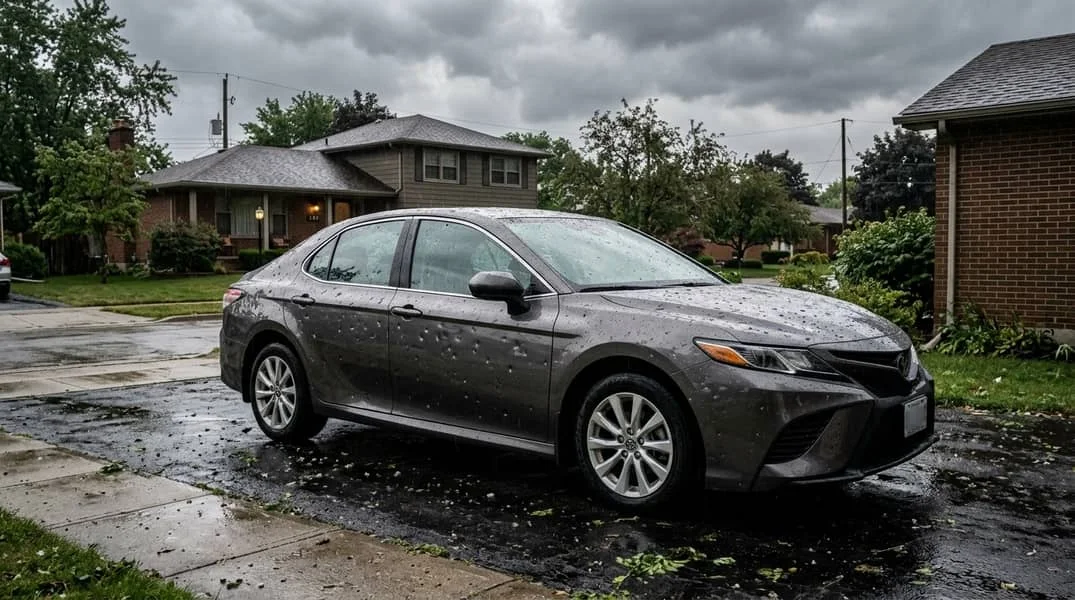
Understanding what to do after hail damage to your car is critical for protecting vehicle value, managing repair costs, and navigating the hail damage repair steps correctly. A proper car hail damage guide helps owners respond quickly after a storm and understand what happens after hail damage, including inspection, documentation, and repair decisions. Knowing how to handle hail damage on a car ensures you follow the correct hail damage car repair process instead of delaying actions that could worsen results.
When dealing with a car damaged by hail, what is next? The key is structured action: inspection, insurance, and hail damage checklist for vehicle owners’ execution.
Step 1: Inspect Hail Damage on Your Car
The first step in hail damage repair is a full inspection. You must understand the signs of hail damage and carefully check the car for hail dents across all surfaces.
Key inspection areas:
- Roof, hood, and trunk hail damage inspection
- Windshield hail damage check
- Side panels and body lines
This helps identify hidden hail damage on vehicles, which is often missed during a quick visual check.
Step 2: Understand the Full Hail Damage Assessment
A proper hail damage assessment determines repair severity and whether hail dent removal or full panel repair is required.
Why assessment matters:
- Identifies repair complexity
- Estimates the cost of repair
- Determines insurance eligibility
Without proper assessment, what to do after hail damage to your car becomes uncertain and can lead to incorrect repair choices.

Step 3: Hail Damage Repair Options
Modern hail damage repair is most commonly done using paintless dent repair for hail damage (PDR).
PDR hail repair process:
- Dent mapping and inspection
- Access behind damaged panels
- Controlled metal reshaping
- Restoration without repainting
This method allows repair of hail dents without repainting, making it the preferred professional hail damage repair solution.
What Is PDR for Hail Damage?
Paintless dent repair hail dents refers to a specialized method where technicians remove dents without affecting the factory paint.
Benefits include:
- Fast hail damage repair
- No repainting required
- Maintains factory finish
- Cost-effective solution
This is why hail damage can be repaired without paint, which is often answered with yes when PDR is applicable.
Mobile and Professional Hail Repair Options
Many providers offer mobile hail damage repair, allowing technicians to fix dents at your location.
Advantages:
- Faster turnaround
- Convenient service
- Same-day evaluation possible
Professional centers offer full hail damage repair without repainting using advanced tools and controlled environments.
Step 4: Insurance and Hail Damage Claims
One of the most important parts of what to do after hail damage to your car is handling insurance.
Key insurance topics:
- Does insurance cover hail damage
- Comprehensive insurance for hail damage
- File an insurance claim for hail damage
Most hail damage insurance process cases fall under comprehensive coverage.

Deductibles and Insurance Process
Understanding your deductible for hail damage repair is crucial before starting repairs.
Insurance workflow:
- Document damage
- Submit hail damage insurance claim
- Receive an estimate from an insurance-approved hail repair shop
- Pay deductible
- Complete repair
This ensures smooth processing and faster approval.
Why Insurance Prefers PDR for Hail Damage
Insurance companies often approve paintless dent repair for hail damage because it is:
- Faster
- Cheaper
- Eco-friendly
- Factory paint safe
This makes the benefits of PDR for hail damage a major reason for widespread adoption.
Step 5: Choosing the Right Repair Method
Most hail damage cases are ideal for hail damage repair without repainting.
When traditional repair is needed:
- Broken paint
- Severe structural damage
- Extreme dents or stretched metal
In these cases, full-body repair may be required instead of hail dent removal.

Need help with hail damage repair steps or filing a hail damage insurance claim?
Contact Admire PDR for fast assessment, insurance guidance, and professional paintless dent repair for hail damage services.
Conclusion: What to Do After Hail Damage to Your Car
So, what to do after hail damage to your car? Start with a full inspection, complete a proper hail damage assessment, and choose between paintless dent repair for hail damage or traditional repair based on severity. Most cases can be efficiently resolved through the PDR hail repair process, offering fast, cost-effective, and paint-safe results.
For expert evaluation and professional hail damage repair, Admire PDR provides fast inspections, insurance assistance, and advanced hail damage repair without repainting solutions.
FAQ: What to Do After Hail Damage to Your Car
After hail damage, the first step in what to do after hail damage to your car is to safely inspect the vehicle, document all visible dents, and avoid delaying repairs. This helps with the hail damage repair steps and supports any future insurance claim.
To check the car for hail dents, inspect the roof, hood, trunk, and side panels under good lighting. A full hail damage assessment should also include windshield and hidden areas where hidden hail damage on vehicles may not be immediately visible.
Yes, in most cases, hail damage can be repaired without paint. Paintless dent repair for hail damage (PDR) allows technicians to perform hail dent removal without affecting factory paint.
The most common and recommended method is paintless dent repair for hail dents. The PDR hail repair process restores panels without sanding or repainting, making it a fast and cost-effective hail damage repair solution.
Yes, most policies cover hail damage insurance claims under comprehensive insurance hail damage coverage. You typically file a claim, get an estimate from an insurance-approved hail repair shop, and pay your deductible.
With fast hail damage repair using PDR, most vehicles can be repaired within a few hours to a couple of days, depending on the severity and number of dents.
PDR may not be suitable if there is cracked paint, dent repair, severe structural damage, or extremely deep dents. In these cases, traditional body repair may be required instead of hail damage repair without repainting.
You might also find our article intriguing:
- How to Fix a Door Ding in a Parking Lot
- Is It Worth Fixing Small Dents Before Selling Your Car?
- Are Small Dents a Big Problem?
Good Luck to You 🌊

