
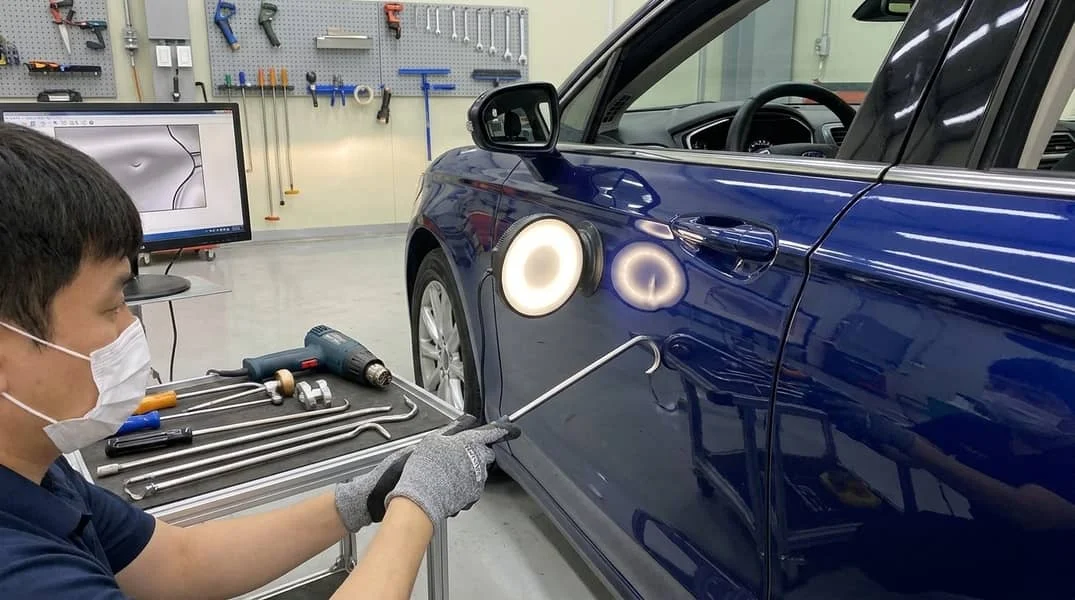
Understanding why PDR is safe for your vehicle starts with addressing common concerns, such as whether PDR is safe, whether it damages your car, and whether it can damage paint. Modern safe dent repair methods like PDR are designed with safety in mind, ensuring dents are removed without compromising factory finish or structural integrity. Unlike traditional repair, the safe dent removal process focuses on non-destructive dent repair, which is why many professionals consider it a paint-safe dent repair solution for modern vehicles.
The key advantage lies in factory finish preservation, original paint protection, and long-term OEM paint retention, making PDR one of the most trusted non-invasive dent repair methods available today.
Is Paintless Dent Repair Safe?
Yes, whether PDR is safe for factory paint is one of the main reasons the method is widely used. PDR does not involve sanding, fillers, or repainting, which helps ensure the preservation of factory paint and maintains original paint preservation.
Why PDR is considered safe:
- No repainting required
- No chemical fillers or abrasives
- Maintains factory bond integrity
- Uses controlled pressure only
This makes paintless repair benefits significantly stronger than traditional body shop methods.
Does Paintless Dent Repair Damage Your Car?
No, does paintless dent repair hurt your car? It is generally answered as no when performed correctly. The PDR repair process uses precise techniques that avoid structural or paint damage.
Key safety factors:
- Controlled metal reshaping without repainting
- No drilling or cutting panels
- Access through existing openings
This ensures vehicle paint protection while restoring the panel.

How Paintless Dent Repair Works Safely
The paintless dent removal process relies on careful manipulation of metal from behind the panel using professional dent repair techniques.
Core process includes:
- Dent inspection and mapping
- Access behind the panel
- Gradual metal reshaping
- Surface refinement using PDR tools and techniques
This non-invasive dent repair approach ensures structural integrity is maintained throughout the repair.
Factory Finish and OEM Protection
One of the strongest advantages of PDR is maintaining the factory finish while restoring the dent.
Benefits include:
- OEM finish protection
- No color mismatch risk
- No paint blending issues
- Long-term durability
This process supports original paint and resale value, which is critical for modern vehicle owners.
Paintless Dent Repair Safety Benefits
The paintless dent repair safety benefits come from its ability to restore dents without altering the original surface.
Key advantages:
- Non-destructive dent repair
- Dent repair without repainting
- Preserves structural integrity
- Reduces risk of repair side effects
These benefits make PDR a preferred solution for cosmetic damage.
Vehicle Value Protection
One major reason why PDR is safe for your vehicle is its impact on resale value.
Value protection factors:
- Maintains OEM paint condition
- Avoids depreciation from repainting
- Preserves original finish certification
- Improves trade-in value
This directly supports maintaining vehicle resale value and helps protect car value over time.
Paintless Dent Repair vs Traditional Repair Safety
Compared to traditional methods, PDR avoids risks associated with fillers and repainting.
Traditional risks:
- Paint mismatch
- Body filler cracking
- Oversanding damage
- Reduced factory integrity
PDR avoids these issues entirely, making it a safer cosmetic vehicle repair solution.
When PDR Is the Safest Option
Ideal repair conditions
PDR is safest when:
- Paint is intact
- Dent is shallow or medium depth
- No structural deformation exists
It is especially effective for:
- Door dings
- Parking lot dents
- Minor impact damage

If you’re wondering whether paintless dent repair is safe for your vehicle or need expert advice on safe dent repair methods, contact Admire PDR for professional inspection and trusted paintless dent repair services.
Protect Your Vehicle with Safe Paintless Dent Repair
So, why PDR is safe for your vehicle comes down to its non-destructive dent repair nature, reliance on paintless dent repair safety, and ability to preserve the factory finish. The PDR repair process restores dents through precise metal reshaping without repainting, ensuring both structural integrity and aesthetic quality remain intact.
By maintaining OEM paint retention, supporting original paint preservation, and improving vehicle appearance preservation, PDR stands out as one of the safest modern repair methods.
For expert evaluation and safe repair solutions, Admire PDR provides professional paint-safe dent repair using advanced PDR tools and techniques.
FAQ: Why PDR Is Safe for Your Vehicle
Yes. The question “Is paintless dent repair safe?” is generally answered yes when the repair is performed by a trained technician. PDR is a non-destructive dent repair method that removes dents without sanding, fillers, or repainting, helping preserve the factory finish.
No. Does PDR damage your car is generally answered no because the PDR repair process uses controlled metal reshaping through existing panel access points. It does not involve cutting, welding, or aggressive grinding.
Under normal conditions, PDR-damaged paint is uncommon. Professional technicians use specialized PDR tools and techniques and controlled pressure to avoid cracking or lifting the paint. Risk increases mainly when paint is already damaged, brittle, or previously repainted.
Yes. Whether PDR is safe for factory paint is one of the strongest advantages of paintless dent repair. Because the process avoids sanding and repainting, it supports OEM paint retention, original paint preservation, and factory finish preservation.
The paintless dent removal process works by accessing the backside of the panel and using precision tools to reshape the metal. This metal reshaping without repainting approach restores the panel while keeping the original paint intact.
The main safety benefits of paintless dent repair include non-invasive dent removal, no fillers or repainting, preservation of factory paint, reduced repair time, and a lower risk of paint mismatch compared with traditional body shop methods.
Yes. PDR helps maintain vehicle resale value because it preserves the original finish. Many buyers and dealers place a premium on original paint and resale value, making paintless repair benefits especially important before selling or trading in a vehicle.
PDR is less suitable when there is cracked paint, severe metal stretching, sharp creases, or structural collision damage. In those cases, traditional body repair may be necessary because dent repair without repainting is no longer feasible.
You might also find our article intriguing:
- When Paintless Dent Repair Is NOT an Option
- How Paintless Dent Repair Works (Step-by-Step)
- Do I Need PDR or Traditional Dent Repair?
Good Luck to You 🌊

