
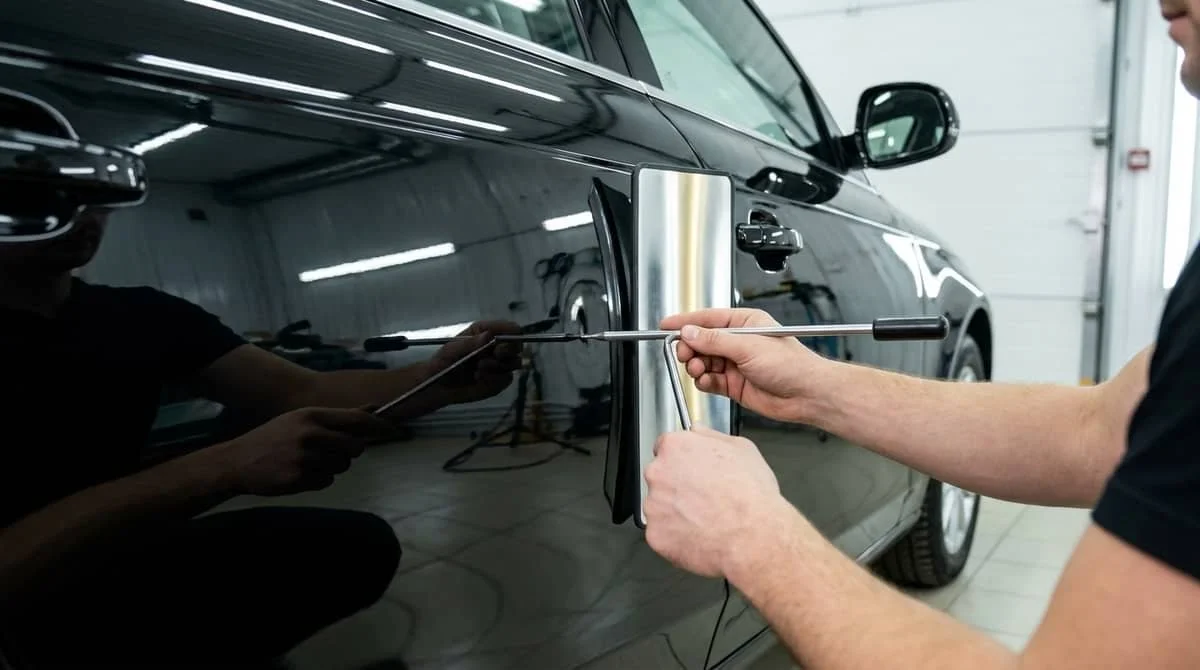
One of the most common concerns among vehicle owners is whether PDR damages paint, especially when considering paintless dent repair for cosmetic vehicle damage. Questions like can paintless dent repair damage paint, is PDR safe for car paint, and does paintless dent repair crack paint are extremely important because preserving the factory finish is one of the main reasons drivers choose PDR. In most cases, paintless dent repair paint damage does not occur when repairs are performed correctly by trained technicians. In fact, whether paintless dent repair is safe is one of the biggest advantages of modern non-invasive dent repair methods focused on dent repair without repainting and preserving factory paint with PDR.
Understanding whether dent repair affects paint depends on paint condition, dent depth, metal flexibility, and repair technique.
What Is Paintless Dent Repair?
To understand whether PDR damages paint, it is important to explain what paintless dent repair is and how PDR works.
Paintless Dent Repair Explained
The paintless dent removal process restores damaged vehicle panels by carefully reshaping metal from behind the dent using specialized tools.
Key characteristics:
-
- Non-invasive dent repair
-
- Dent repair without repainting
-
- Factory paint preservation and repair
-
- No sanding or fillers
This is why preserving factory paint with PDR is one of the most valuable benefits of the repair process.

Is PDR Safe for Car Paint?
Is paintless dent repair safe?
Yes, in most situations, is PDR safe for car paint can be answered with confidence: professional PDR is specifically designed to avoid paint damage.
Why PDR is considered safe:
-
- No repainting required
-
- No chemical stripping
-
- No abrasive sanding
-
- Original clear coat remains intact
Professional technicians focus on factory paint protection during PDR to ensure the panel returns to shape without surface damage.
Can PDR Preserve Original Paint?
One of the primary reasons customers choose PDR is that PDR preserves the original paint, which is usually yes.
Benefits of preserving factory paint:
-
- Better resale value
-
- No color mismatch risk
-
- Factory coating remains original
-
- Faster repair time
This is why preserving factory paint with PDR is a major ranking factor in modern cosmetic auto repair searches.
Does Paintless Dent Repair Crack Paint?
The question of paintless dent repair, cracks, and paint depends heavily on paint condition and dent severity.
Normally, PDR does NOT crack paint when:
-
- Paint is flexible
-
- The dent is shallow
-
- Factory paint is intact
-
- Repairs are performed professionally
However, the risk of paint cracking during dent repair increases in specific situations.
When PDR Can Damage Paint
Although paintless dent repair paint damage is uncommon, there are scenarios where PDR can damage paint becomes relevant.
Higher-risk situations include:
-
- Old paint and paintless dent repair
-
- Repainted panels and PDR risks
-
- Cracked paint before dent repair
-
- Deep dents and paint damage
-
- Sharp dents, paint cracking risk
-
- Low-quality repaint and PDR
These conditions reduce paint flexibility and increase cracking probability.
Paint Flexibility and Dent Repair
Why paint flexibility matters
Modern factory paint systems are flexible enough to support dent repair without repainting. However, older or repainted surfaces are more brittle.
Paint flexibility affects:
-
- Dent recovery success
-
- PDR paint safety
-
- Clear coat durability
-
- Crack resistance
This is why experienced technicians evaluate paint flexibility and dent repair compatibility before beginning repairs.

PDR and Clear Coat Damage
Does PDR damage the clear coat?
In properly performed repairs, PDR and clear coat damage should not occur.
Professional PDR paint safety standards:
-
- Controlled pressure application
-
- Heat management
-
- Proper tool positioning
-
- Slow metal reshaping
Professional repair methods prioritize factory paint protection during PDR throughout the process.
Does Heat Damage Paint During PDR?
In some cases, technicians use controlled heat during repairs.
Does heat damage paint during PDR?
Normally, no—when used correctly.
Heat is applied to:
-
- Increase paint flexibility
-
- Reduce cracking risk
-
- Improve metal movement
However, improper technique can increase the risk of paint cracking during dent repair.
Dent Types Suitable for PDR
Some damage types are safer for PDR than others. Choosing the right repair method starts with understanding the damage — just as effective SEO starts with understanding search intent.
Common dent types suitable for PDR:
-
- Door ding repair without repainting
-
- Can hail damage be repaired without paint damage
-
- Small round dents
-
- Minor body line dents
Higher-risk repairs:
-
- Can large dents crack paint
-
- Sharp creases
-
- Severe body line distortion
The more severe the damage, the greater the possibility that dent repair affects the paint becomes a concern.
Body Line Dents and Paint Safety
Body lines are structurally rigid areas of the panel, making them more difficult to top repair.
Challenges include:
-
- Higher metal tension
-
- Increased cracking risk
-
- More pressure during reshaping
Even so, experienced technicians can often repair body line dents and paint safety cases successfully without repainting.
Can Hail Damage Be Repaired Without Paint Damage?
Yes, most hail dents are ideal for PDR because:
-
- Damage is usually shallow
-
- Paint often remains intact
-
- Metal is not severely stretched
This makes hail damage paintless dent repair one of the most common and safest applications of PDR.
Concerned about whether paintless dent repair cracks paint or whether your vehicle qualifies for safe, non-invasive dent repair?
Contact Admire PDR today for expert assessment and professional paintless dent repair focused on maximum paint protection and factory finish preservation.

Does PDR Damage Paint?
So, does PDR damage paint? In most cases, no. Professional paintless dent repair is specifically engineered for dent repair without repainting and preserving factory paint with PDR. While certain conditions, such as old paint and paintless dent repair, repainted panels and PDR risks, or deep dents and paint damage can increase risk, experienced technicians use specialized methods to minimize paint stress and maintain surface integrity.
For expert evaluation of whether your dent qualifies for safe paintless dent repair, Admire PDR provides professional inspections, advanced repair techniques, and factory-finish-focused dent restoration services.
FAQ: Does PDR Damage Your Car’s Paint?
Does PDR damage paint?
In most cases, paintless dent repair (PDR) does not damage paint. The method is designed as non-invasive dent repair, meaning it restores the metal without sanding, fillers, or repainting, helping to preserve factory paint with PDR.
Can paintless dent repair damage paint?
It is rare, but paintless dent repair can damage paint in certain conditions, such as pre-existing paint cracks, poor-quality repainting, or severely stretched metal. These situations increase the risk of paint cracking during dent repair.
Is PDR safe for car paint?
Yes, PDR is safe for car paint when performed by a trained technician. Proper paintless dent removal process techniques are designed to maintain the clear coat and factory finish without affecting paint integrity.
Does paintless dent repair crack paint?
Normally, does paintless dent repair crack paint is no. However, cracks may occur if the paint is already weak, aged, or previously damaged before repair begins.
Will PDR ruin factory paint?
No, will PDR ruin factory paint is generally false. One of the main advantages of PDR is factory paint protection during PDR, which helps maintain the original finish and vehicle value.
When can PDR damage paint?
When PDR can damage paint includes cases such as:
– Old or brittle paint
– Repainted panels
– Deep dents or sharp creases
– Pre-existing cracks or damage
In these cases, paint damage and PDR risks are higher, and traditional repair may be recommended.
Does dent repair affect paint?
When done correctly, does dent repair affect paint? Usually, no. PDR is specifically designed for dent repair without repainting, ensuring the original paint and clear coat remain intact.
You might also find our article intriguing:
Good Luck to You 

