
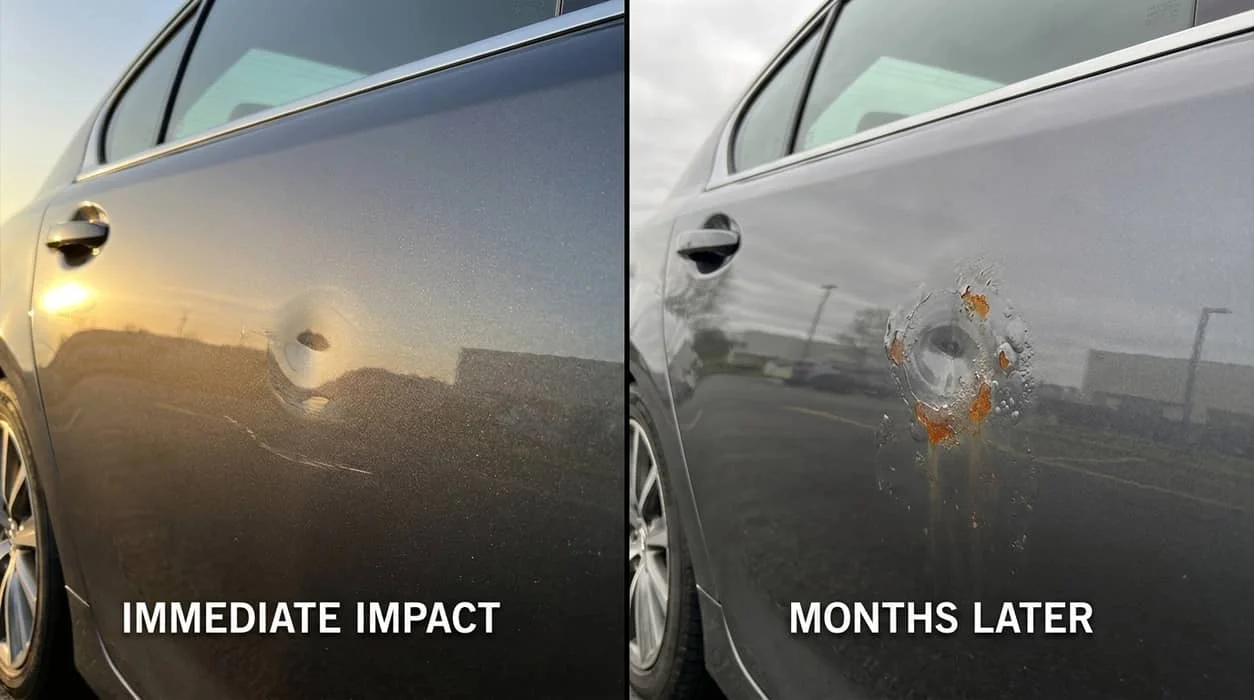
Many drivers assume that small car dents are nothing more than a cosmetic annoyance. A tiny door ding in a parking lot or a shallow dent from a shopping cart often seems too minor to worry about. But should you ignore small car dents? In most cases, the answer is no.
A seemingly harmless dent can become a much bigger problem over time. Depending on the impact, the damage may weaken the vehicle’s protective paint layer, expose bare metal, trap moisture, or affect the structural integrity of the body panel. What starts as a simple cosmetic issue can eventually require more extensive—and more expensive—repairs.
The good news is that modern paintless dent repair for small dents offers a fast, affordable solution that preserves your vehicle’s original factory finish. Whether you’re dealing with a door ding, minor hail damage, or another small impact, repairing the damage early can save money while protecting your car’s value.
In this guide, we’ll explain why fix small car dents, discuss are small dents a problem, explore the consequences of small car dents, and show when minor dent repair using Paintless Dent Repair (PDR) is the best choice.
7 Reasons: You Shouldn’t Ignore Small Car Dents
1. Small Car Dents Can Turn Into Rust Problems
One of the biggest misconceptions is that a small dent only affects appearance.
In reality, many impacts slightly crack or stretch the paint, even when damage isn’t immediately visible. Once moisture reaches the metal beneath the paint, oxidation begins.
How rust develops
- Dent damages the paint.
- Moisture enters microscopic cracks.
- Bare steel becomes exposed.
- Rust forms beneath the paint.
- Corrosion spreads across the panel.
This is exactly why small dents cause rust more often than many vehicle owners realize.
Common warning signs include:
- Bubbling paint
- Orange discoloration
- Peeling clear coat
- Rust under chipped paint
- Soft or weakened metal
When exposed metal rust develops, repairs become significantly more expensive than simple small dent repair.
2. Small Dents Can Become Larger Over Time
Many people ask:
Can small dents get worse?
Yes.
Vehicle body panels constantly flex because of:
- Temperature changes
- Road vibration
- Everyday driving
- Opening and closing doors
- Additional minor impacts
These repeated stresses may enlarge an existing dent or worsen hidden paint damage.
Even if the dent doesn’t visibly increase in size, moisture trapped beneath damaged paint can continue causing body panel corrosion from the inside out.
The longer untreated dents remain, the higher the chance of requiring traditional body shop repairs instead of Paintless Dent Repair.

3. Small Car Dents Reduce Your Vehicle’s Value
Whether you’re planning to sell, trade in, or lease your vehicle, appearance matters.
Professional appraisers immediately notice:
- Door dings
- Parking lot dents
- Minor body damage
- Hail dents
- Creased panels
Multiple small car dents often create the impression that the vehicle hasn’t been well maintained.
How dents affect resale
| Condition | Buyer Impression |
| Smooth factory panels | Well maintained |
| Multiple door dings | Poor maintenance |
| Minor dents with chipped paint | Possible hidden damage |
| Rust around dents | Expensive future repairs |
Even inexpensive minor car dent repair often pays for itself through improved resale value.
4. Paint Damage Is Often Worse Than It Looks
One reason people ask are small dents worth fixing is because the paint appears undamaged.
Unfortunately, paint damage isn’t always visible.
Modern automotive paint systems consist of multiple layers:
- Clear coat
- Color coat
- Primer
- Metal panel
An impact may stretch these layers enough to create microscopic fractures.
Over time this can lead to:
- Paint damage from dents
- Moisture intrusion
- Rust beneath the finish
- Delamination
- Corrosion
Professional technicians inspect dents using specialized lighting to detect damage invisible under normal conditions.
If the factory paint remains intact, paintless dent repair for small dents is usually the ideal solution.
5. Minor Repairs Are Usually Faster and Less Expensive
Many drivers delay repairs because they expect high body shop costs.
Fortunately, minor dent repair is often surprisingly affordable.
Paintless Dent Repair eliminates many traditional repair steps, including:
- Sanding
- Body filler
- Primer
- Paint matching
- Repainting
- Blending adjacent panels
Instead, certified PDR technicians use specialized rods, tabs, and precision tools to gently massage the metal back into its original shape while preserving the factory finish.
Benefits of Paintless Dent Repair
- Faster turnaround
- Lower repair costs
- Original paint preserved
- No color mismatch
- Environmentally friendly
- Higher resale value
- Factory corrosion protection remains intact
This makes repair small dents on car one of the highest-value maintenance decisions a vehicle owner can make.

6. Ignoring Dents Can Lead to More Expensive Repairs Later
The consequences of small car dents aren’t always immediate.
However, delayed repairs frequently result in:
- Rust spreading
- Paint failure
- Larger damaged areas
- Traditional body shop repairs
- Replacement panels
- Higher labor costs
Early repair vs delayed repair
| Early Repair | Delayed Repair |
| Paintless Dent Repair | Body filler |
| Factory paint retained | Repainting required |
| Lower repair cost | Higher repair cost |
| Fast service | Longer repair time |
| Better resale value | Lower resale value |
This is why professional technicians recommend fixing dents as soon as possible.
Even seemingly insignificant minor vehicle damage can become far more expensive if corrosion develops.
7. Professional Dent Removal Restores Your Vehicle Properly
DIY dent removal videos are everywhere.
While some methods appear simple, they often create additional problems.
Common DIY mistakes include:
- Pulling the metal too far
- Cracking paint
- Creating high spots
- Damaging clear coat
- Stretching metal
- Using excessive heat
- Making PDR impossible
Professional dent removal service technicians evaluate:
- Metal thickness
- Dent depth
- Paint condition
- Panel accessibility
- Aluminum versus steel construction
- Previous repairs
Not every dent qualifies for Paintless Dent Repair, but experienced technicians can determine the best solution while minimizing repair costs.
At Admire PDR, trained specialists use industry-leading PDR techniques to remove small dents, restore factory body lines, and protect your vehicle’s original finish without unnecessary repainting.
Paintless Dent Repair Is the Best Solution for Most Small Dents
When drivers search for small dent repair or repair small dents on car, they often discover two primary repair options:
- Paintless Dent Repair (PDR)
- Traditional body shop repair
For many types of minor vehicle damage, PDR is the preferred solution because it restores the metal without sanding, fillers, or repainting.

What Is Paintless Dent Repair?
Paintless Dent Repair (PDR) is a specialized technique that carefully reshapes damaged metal from behind the panel using precision tools. The goal is to restore the panel to its original contour while preserving the factory paint.
PDR works exceptionally well for:
- Small car dents
- Door ding repair
- Parking lot dents
- Shopping cart dents
- Minor hail damage
- Soft bodyline dents
- Aluminum panel dents (when repairable)
If the paint remains intact and the metal hasn’t been excessively stretched, PDR often produces results that are virtually undetectable.
Paintless Dent Repair vs Traditional Body Repair
| Paintless Dent Repair | Traditional Body Repair |
| Keeps original factory paint | Requires repainting |
| No body filler | Uses filler and primer |
| Faster turnaround | Longer repair process |
| Lower overall repair costs | Typically more expensive |
| Preserves resale value | Paintwork may affect resale |
| Eco-friendly process | Uses paint and chemicals |
| Excellent for minor dents | Better for severe collision damage |
Because the factory finish remains untouched, paintless dent repair for small dents helps maintain manufacturer corrosion protection and factory paint quality.
Can Insurance Cover Small Dent Repair?
Many vehicle owners assume insurance only applies to major accidents.
In reality, coverage depends on how the damage occurred.
Possible covered situations include:
- Hail damage
- Falling tree branches
- Storm debris
- Parking lot incidents
- Vandalism
- Certain comprehensive claims
Whether filing a claim makes financial sense depends on your deductible and the repair cost.
An experienced PDR specialist can often help determine whether insurance is worthwhile or if paying out of pocket is the better option.
At Admire PDR, customers receive honest recommendations based on the actual damage—not unnecessary repairs.

Aluminum Panels Require Specialized Expertise
Today’s vehicles increasingly use aluminum body panels to reduce weight and improve fuel efficiency.
Manufacturers such as:
- Ford
- Tesla
- Rivian
- Audi
- Jaguar
- Land Rover
- Mercedes-Benz
use aluminum extensively throughout their vehicle designs.
Although aluminum can often be repaired using Paintless Dent Repair, it behaves differently than traditional steel.
Proper repair requires technicians who understand:
- Aluminum memory
- Metal stretching
- Panel tension
- Specialized tooling
- Controlled pressure techniques
Choosing an experienced PDR shop ensures these advanced materials are repaired correctly without unnecessary replacement.
How Much Does Minor Dent Repair Cost?
One of the most common questions drivers ask is:
Are small dents worth fixing?
In most cases, absolutely.
While every repair is unique, the overall cost depends on factors such as:
- Dent size
- Dent depth
- Location on the vehicle
- Accessibility
- Paint condition
- Number of dents
- Steel vs. aluminum panels
- Whether collision damage is involved
Repairing damage early is almost always less expensive than waiting until corrosion or paint failure develops.
Signs You Should Repair a Small Dent Immediately
Don’t delay repairs if you notice any of the following:
- Chipped paint
- Scratched clear coat
- Bare metal exposure
- Multiple parking lot dents
- Door edge damage
- Rust beginning to form
- Hail damage
- Sharp bodyline dents
- Deep creases
- Water collecting inside the dent
These warning signs increase the likelihood of dents lead to corrosion, making prompt repair the best long-term decision.

Expert Tips From PDR Professionals
Repair dents before winter
Road salt and moisture significantly accelerate corrosion.
Keep the factory paint whenever possible
Factory finishes are more durable than aftermarket repainting and help preserve resale value.
Don’t wait for rust
Once corrosion starts beneath the paint, repairs become more extensive and expensive.
Have dents inspected promptly
Some dents that appear severe are actually excellent candidates for Paintless Dent Repair.
Choose experienced PDR technicians
Skill, specialized lighting, and precision tools make a substantial difference in repair quality.
Common Mistakes Car Owners Make
Avoid these common errors:
- Waiting months or years before repairing dents
- Assuming every dent is purely cosmetic
- Trying DIY suction cup repairs
- Ignoring chipped paint
- Believing repainting is always necessary
- Choosing repair based only on the lowest price
- Waiting until rust appears
- Not getting a professional inspection
Many untreated dents remain repairable for a period of time—but delaying too long can eliminate the possibility of successful Paintless Dent Repair.
Why Drivers Choose Admire PDR
When your vehicle deserves professional care, choosing an experienced Paintless Dent Repair specialist makes all the difference.
At Admire PDR, every repair is focused on restoring your vehicle while preserving its original factory finish whenever possible.
Customers trust Admire PDR for:
- Experienced PDR technicians
- Advanced dent removal equipment
- Precision repairs for steel and aluminum panels
- Door ding repair
- Hail damage repair
- Minor collision dent restoration
- Honest repair recommendations
- Fast turnaround times
- Outstanding customer service
- Quality workmanship that protects your vehicle’s value
Whether you need to fix small dents, remove small dents, or restore your vehicle after hail damage, professional Paintless Dent Repair offers a proven solution that saves both time and money.

Summary
So, should you ignore small car dents?
The evidence says no.
Even minor dents can:
- Damage your vehicle’s paint.
- Allow moisture to reach exposed metal.
- Lead to corrosion and rust.
- Reduce resale and trade-in value.
- Become more expensive to repair over time.
The good news is that most small car dents can be repaired quickly and efficiently using Paintless Dent Repair while preserving your factory finish.
Acting early helps prevent long-term vehicle damage, protects your investment, and keeps your car looking its best.
If you’ve noticed a new dent, don’t wait for it to become a bigger problem. A professional evaluation can determine whether paintless dent repair for small dents is the right solution and help you avoid unnecessary future costs.
Frequently Asked Questions
No. Even if a dent appears cosmetic, it may have damaged the paint or exposed metal underneath. Repairing small dents early helps prevent rust, corrosion, and more expensive repairs later.
Yes. Some impacts create microscopic cracks in the paint that aren’t visible to the naked eye. Moisture can still penetrate these damaged areas, eventually causing corrosion beneath the surface.
Absolutely. Minor dent repair is typically less expensive than repairing rust or repainting damaged panels later. It also helps preserve your vehicle’s resale value and factory finish.
Yes. Temperature changes, road vibrations, and moisture exposure can worsen existing dents and contribute to paint deterioration and corrosion if left untreated.
Paintless Dent Repair is a specialized process that removes dents by carefully reshaping the metal without sanding, filling, or repainting. It’s ideal for many small dents, door dings, and hail damage when the paint remains intact.
It depends on your insurance policy and how the damage occurred. Comprehensive coverage may apply to hail damage, vandalism, or certain non-collision incidents. Your repair professional can help determine whether filing a claim is worthwhile.
A qualified PDR technician will evaluate the dent’s size, depth, location, paint condition, and panel material. Many small dents, door dings, and hail dents can be repaired successfully without repainting if the factory finish is still intact.
You might also find our article intriguing:
- Complex Dent Repair: What’s Possible with PDR?
- How We Repaired a Tesla Without Repainting
- Case Study: Hail Damage Repair (Before & After)
Good Luck to You 🌊

